- Published on
No-Shows Are Costing Your Practice More Than You Think, Here's the Fix
- Authors

- Name
- Vuk Dukic
Founder, Senior Software Engineer
The Morning That Costs You Thousands
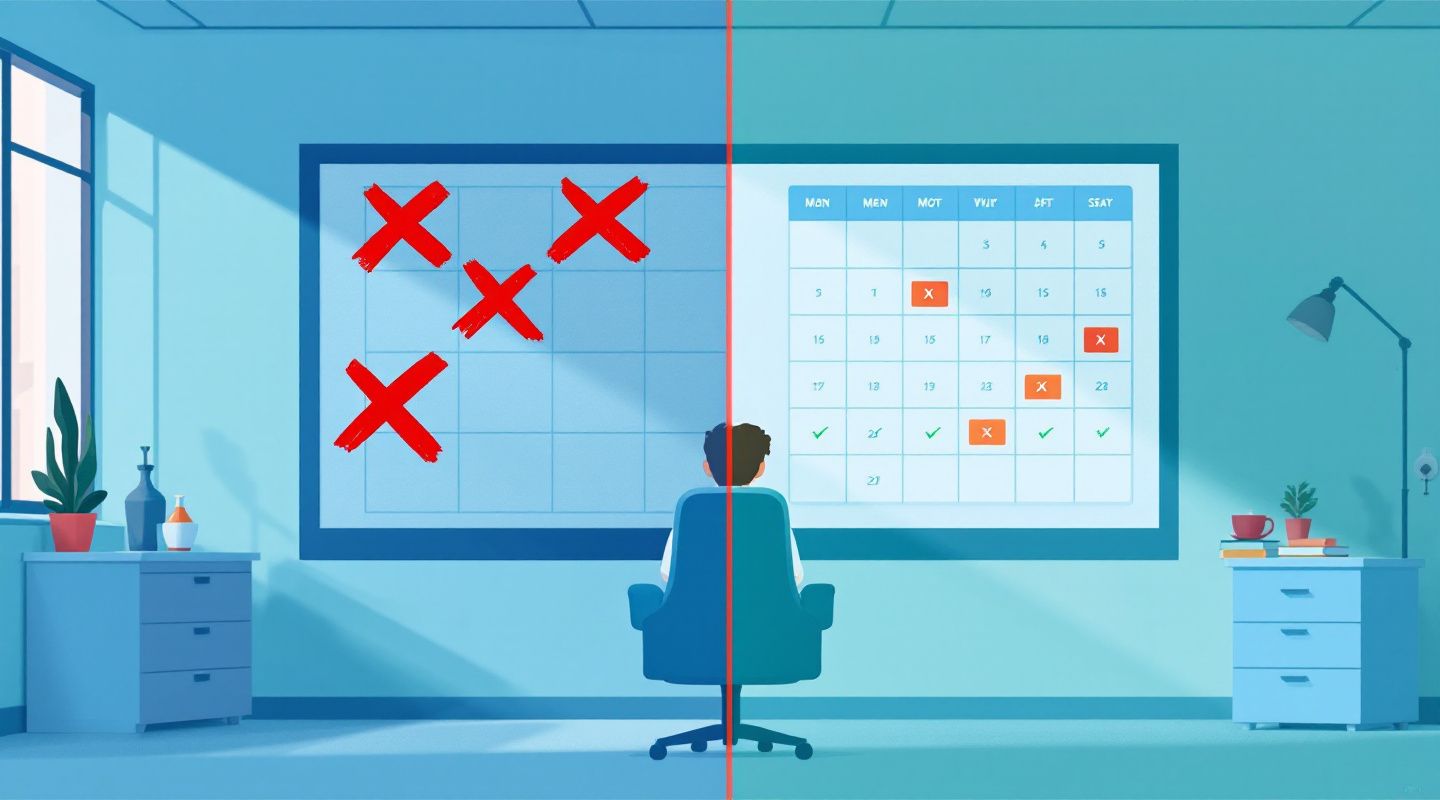
It is 8:02 AM. The morning huddle is wrapping up, and someone points at the schedule. Two hygiene blocks and a crown prep sit empty. The patients did not call. They simply did not show. Your front desk coordinator is already on the phone trying to fill the gaps, your hygienists are standing around, and the production target for the day has quietly slipped out of reach before a single patient has sat in a chair.
If this scene feels familiar, you are not alone. No-shows and last-minute cancellations are one of the most consistent and damaging problems in dental practice operations. And most practices are still fighting them with tools that were built for a different era.
The True Cost of an Empty Chair
Let us talk numbers, not the kind invented to shock you, but realistic ranges that reflect what practices across the country actually experience.
A single missed hygiene appointment can represent anywhere from $150 to $300 in lost production. A missed restorative or specialty appointment can push that figure well past $500. Multiply that across two or three no-shows per day, five days a week, and you are looking at a figure that can easily reach tens of thousands of dollars in lost annual revenue for a single-provider practice. For a DSO running multiple locations, the number becomes significant very quickly.
But the production loss is only part of the story. Consider:
- Provider and hygienist time that is paid regardless of whether a patient shows
- Fixed overhead including rent, utilities, equipment leases, and software subscriptions that run whether the chair is full or empty
- Schedule inefficiency that ripples through the day, making it harder to serve patients who do want to come in
- Reduced patient access for those on your waitlist who could have taken that slot with a little notice
No-shows do not just hurt your revenue. They hurt your team's morale and your ability to deliver consistent care.
Why Traditional Fixes Fall Short
Most practices have already tried the obvious solutions. Here is why they tend to underperform.
Manual reminder calls put the burden on your front desk staff, who are already juggling check-ins, insurance verification, and incoming calls. Calls often go to voicemail. Patients do not always call back. The staff moves on.
One-size-fits-all text blasts go out at the same time, with the same message, to every patient. They are better than nothing, but they do not account for which patients are actually high risk, and they do not make it easy for a patient to respond, reschedule, or communicate a conflict.
Overbooking creates its own chaos. When everyone does show up, the schedule breaks down, wait times increase, and the patient experience suffers. You are trading one problem for another.
Cancellation fees can feel punitive and damage the patient relationship, particularly for loyal long-term patients. They also require staff time to enforce and often result in conflict rather than resolution.
The core issue is that these approaches are reactive and manual. What practices actually need is a system that works proactively and automatically.
How AI Changes the Equation
AI-powered patient communication does not just send reminders faster. It changes the entire dynamic of how your practice manages the space between booking and appointment.
Multi-channel reminders timed intelligently. Instead of one call two days before, an AI system can send a layered sequence across text, email, and voice, timed based on appointment type and lead time. A hygiene recall might get a different cadence than a new patient exam or a complex restorative case.
Two-way confirmation. Patients can reply to confirm, request a reschedule, or flag that they cannot make it, without calling the office. When a patient signals a conflict 48 hours out, that is a recoverable situation. When they simply do not show, it is not.
Instant waitlist backfill. The moment a slot opens, the system identifies patients on the waitlist who match the available time and appointment type and reaches out to offer the slot automatically. No manual calls. No clipboard on the front desk. Recovered production without recovered effort.
AI voice agents handling reschedule requests. With a voice agent like Echo, patients who call after hours to cancel or reschedule are not sent to voicemail. They are greeted, their request is handled, and the appointment is updated in the schedule. The next morning, your team sees a clean, accurate schedule rather than a pile of voicemails to sort through.
Risk-based follow-up. Not every patient needs the same level of outreach. AI can identify patients with a history of cancellations or no-shows and trigger more proactive follow-up for those appointments. Patients who always confirm on the first message need less touchpoints. High-risk appointments get more.
Automatic CRM and PMS logging. Every interaction, every confirmation, every reschedule request is logged back into the patient record automatically. Your team has full visibility without doing any data entry.
A Simple Implementation Path
You do not need to overhaul your practice overnight. Here is a straightforward sequence:
- Audit your current no-show rate. Pull the last 90 days and get a baseline. Know which appointment types and which patient segments are driving the problem.
- Map your reminder cadence. Decide how many touchpoints make sense for each appointment type and at what intervals. Work with your AI platform to build those sequences.
- Automate confirmations and two-way replies. Set up the logic so that a patient reply triggers the right action automatically, whether that is marking confirmed, opening a reschedule workflow, or flagging the slot as at risk.
- Activate waitlist backfill. Build your waitlist inside the same system so that freed slots can be offered immediately without manual effort.
- Track results monthly. Review your no-show rate, confirmation rate, recovered production, and front desk hours saved. Adjust cadences based on what the data shows.
What to Measure
These are the four metrics that matter most:
- No-show rate (target below 5 percent for most practice types)
- Confirmation rate (how many patients actively confirmed before the appointment)
- Recovered production (the dollar value of slots that were filled through waitlist backfill)
- Front desk hours saved (fewer manual calls and voicemail callbacks means more capacity for in-office patient experience)
Why a Native Platform Beats a Stack of Point Solutions
Many practices try to solve this with a combination of separate tools: one for reminders, one for scheduling, one for calls. The problem is that these tools do not talk to each other cleanly, data falls through the gaps, and your team ends up doing manual reconciliation anyway.
A platform like Anablock runs all of this natively. The AI assistant Ana manages patient communication and follow-up across channels. The voice agent Echo handles inbound and outbound calls without human intervention. Waitlist management, confirmation tracking, and CRM logging all happen inside the same system. Nothing needs to be stitched together because it was built to work as one.
That means less tool management for your team, cleaner data for your practice, and a patient experience that feels consistent from first contact through appointment day.
Your Schedule Should Work for You
No-shows will never reach zero. But they can be reduced significantly, and the production that would otherwise be lost can be recovered systematically. Practices that implement AI-powered scheduling communication typically see meaningful improvements in confirmed appointment rates, fewer surprise gaps on the day-of schedule, and front desk teams that spend more time on patients in the building rather than chasing patients who are not.
If you want to see exactly how this would work for your practice, including a look at how Ana and Echo operate inside a real workflow, Book a call with Vuk and we will walk through your current setup and show you what is possible.